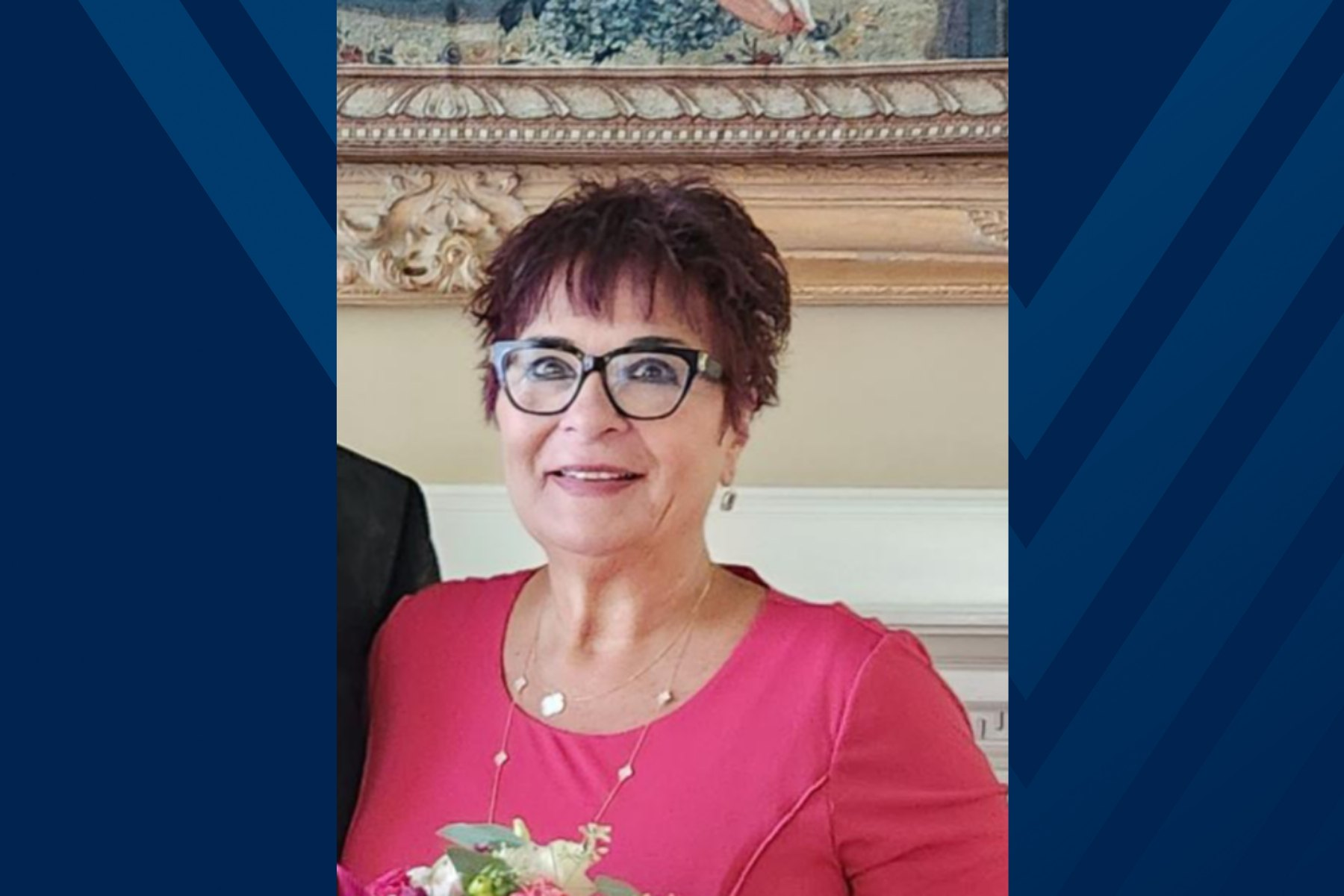
Mary Jo Hoffman, a long-time Martinsburg resident and nurse of more than 40 years, had been quietly suffering for decades. After giving birth in the early 1990s, she was told that her worsening symptoms—severe constipation, bladder leakage, and persistent abdominal pain—were simply the result of childbirth and nerve damage. Over time, these symptoms interfered more and more with her daily life, limiting where she could go, how long she could be away from home, and what she could comfortably do.
Everything changed when she connected with Jessica Hott, D.O., a gynecologic surgeon with WVU Medicine Minimally Invasive Gynecologic Surgery (MIGS) in Martinsburg. During what began as a routine conversation, Dr. Hott asked thoughtful questions and raised a possibility Hoffman had never considered: endometriosis.
Hoffman was shocked. “I thought I was too old for that,” she said. But Hott recognized the signs and began a thorough evaluation that ultimately confirmed what had been missed for decades.
Under Hott’s care, Hoffman underwent a complex, robot-assisted laparoscopic surgery to treat deep infiltrating endometriosis. The procedure included the removal of a pelvic sidewall mass pressing on her right obturator nerve, ureterolysis, and the excision of dense fibrotic tissue affecting both the bladder and rectum. Since the surgery, Hoffman has made a steady recovery and reports a dramatic improvement in her overall quality of life.
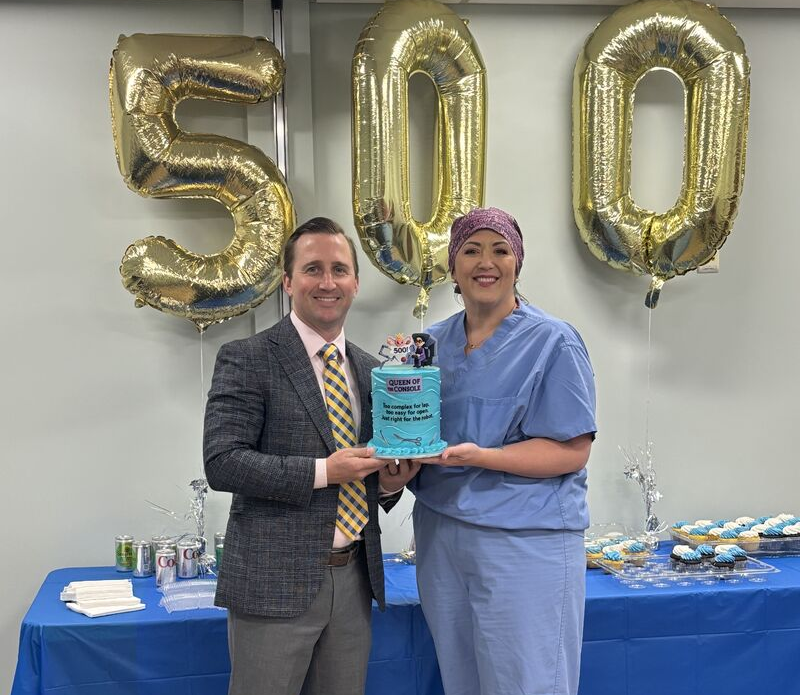
While Hoffman appreciated Hott’s warmth and compassion, it was her surgical expertise that truly put her at ease. Hott recently surpassed 500 robotic procedures using the da Vinci Surgical System, a milestone that reflects her skill, experience, and leadership in minimally invasive gynecologic surgery.
She was also among the first in the WVU Health System to perform surgery using the latest da Vinci 5 robot. Her ability to diagnose and treat complex cases with precision and empathy has earned her a reputation as both a trusted surgeon and advocate for women’s health.
Hoffman describes the MIGS Clinic as warm, efficient, and centered around women’s needs. She felt seen, heard, and supported from the moment she walked in.
“Dr. Hott takes her time and genuinely cares,” Hoffman said. “She wants her patients to understand what’s going on with their bodies, and she makes sure they know they have options.”
For Hoffman, the outcome has been life changing. For Hott, it’s one more example of how robotic technology and personalized care can give women back the quality of life they deserve.